If you are shopping for solar and find yourself comparing panel brands first, pause. In the Central Okanagan, the bigger question is where your array will live. Properties here range from tight lakeview rooftops to half-acre rural lots, and that difference shapes everything: roof age and pitch, shading, snow shedding and available land. Before you gather quotes for solar panels for residential roofs, it helps to know which configuration you are actually pricing: rooftop, ground-mount or an outbuilding, carport or pergola array. West Winds Holdings provides local consultations and works with qualified installation partners for solar, battery backup and off-grid options. In this post, we will start with the mount instead of the panel brand, explain the three main configurations in plain language, and then compare the decision factors that really move cost and production. You will also see a side-by-side comparison, local permit and BC Hydro program points to verify, and the questions to ask before you sign anything. By the end, you should have a clearer idea of which setup likely fits your property and what to check next.
Start With the Mount, Not the Panel Brand
Here's the thing about shopping for solar: the mount you choose matters more than the badge on the panel itself.
Where the panels sit decides almost everything downstream: cable runs, shading, snow exposure, and how easily you can reach the array for cleaning or service. Natural Resources Canada's planning guide puts array location and structure ahead of module choice for the same reason.
From what we observe locally, the mount decision tends to have a bigger effect on cost and production than the panel brand, but your site always gets the final say.
Most houses can support more than one setup. Roof age, shading, and usable land usually decide it, not module specs.
So get your configuration right first. Then compare quotes for residential solar installations on equal footing. Let's look at the three options.
The Three Solar Configurations in Plain Language
Here are the three setups you will actually be choosing between.
Roof-mount: panels fastened to your existing roof covering with rails and flashing. Most common where the roof is sound, reasonably sunny and not due for replacement.
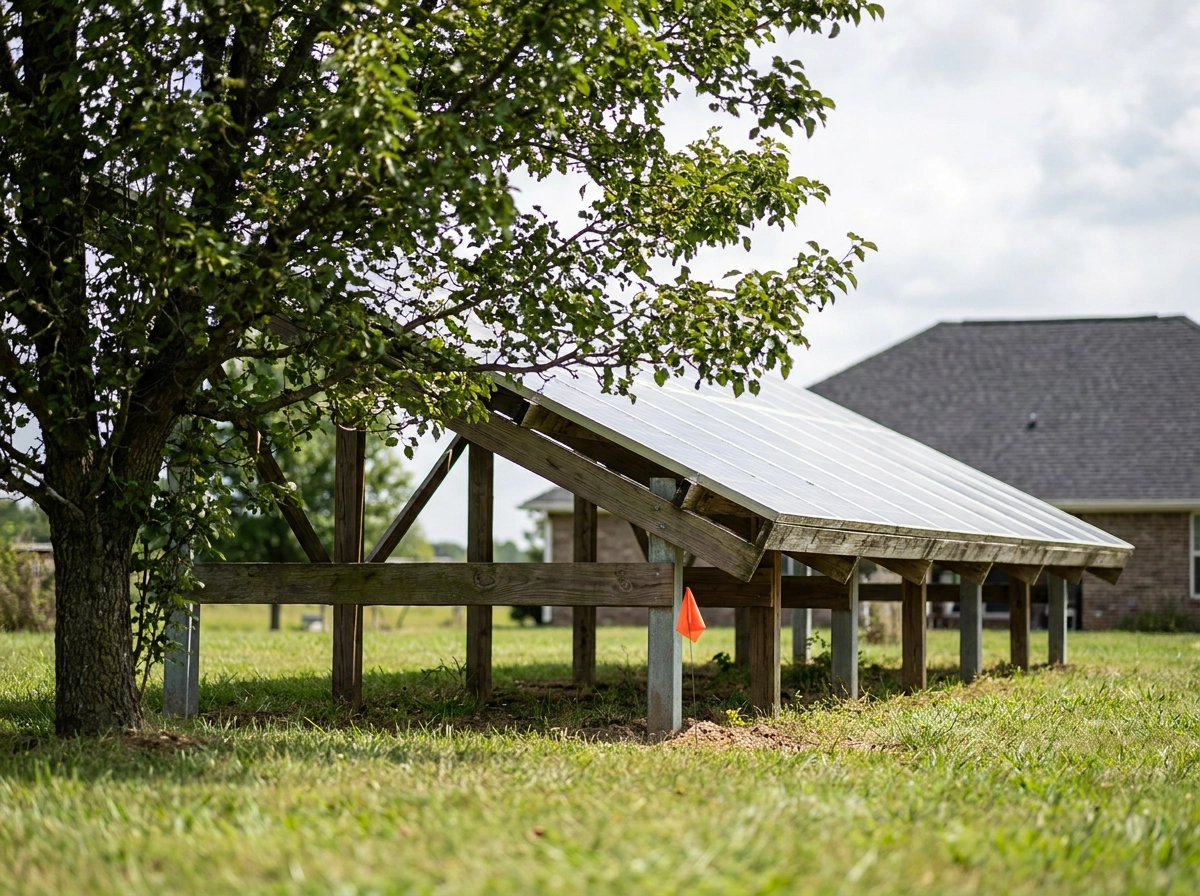
Ground-mount: panels on a frame set into the yard, tilted at whatever angle you choose. Often a better fit when your roof is shaded, too old or facing the wrong way, and when the lot has room.
Outbuilding, carport or pergola arrays: panels on a garage, shop, shed or purpose-built structure. A useful middle path when the house roof is unsuitable but open land is unavailable or unwanted.
Mixed setups exist too, like part roof and part carport, and are worth asking about when no single surface can carry the array you want.
Three terms will come up again: pitch (how steeply a roof slopes), snow shedding (how quickly snow slides off a surface), and setback (the required distance from a structure to a property line). We will start with rooftop.
Rooftop Solar: What Central Okanagan Homes Can Support
That said, not every roof is a solar roof. Five things settle it.
Roof age: if your shingles or membrane are near the end of their service life, roof first, solar second, or you'll pay to lift and reinstall panels later.
Pitch and direction: steeper roofs shed snow faster but are harder and riskier to work on. South-facing slopes catch the strongest sun; east and west still produce useful output.
Shading: mature trees, a neighbouring building, even a chimney can cut production more than most homeowners expect. Check winter shade in the Okanagan at the worst time of year, not the best.
Snow shedding and load: snow can release in one sheet onto walkways, doorways or a lower roof, so placement matters. Snow design loads vary with elevation and shift through the season, so confirm structural capacity with a qualified professional before installation.
Covering and attachment: installers will want to see rafter condition, covering age and where mounts can be flashed properly. Those choices last decades.
Ground-Mount Solar on Larger Lots
On a half-acre rural lot in Lake Country or Peachland, a ground array usually has room to breathe. It needs its footprint plus clearance for whatever tilt you choose, a luxury lakeview parcel in West Kelowna rarely offers.
Because the racking, not your roof, sets the angle, you can aim the array at the strongest sun and, with some designs, adjust it season to season. Before picking a spot, check mature trees and how big they will grow, planned outbuildings, septic fields, and view lines you want to protect.
Distance matters too. The run from array to electrical panel drives wiring cost and complexity, so a short, simple route is usually the cheaper one. Your installer will need the path, disconnects and equipment documented for the utility, and BC Hydro's sample diagram shows how that layout is drawn.
Setbacks, permits, soil and slope vary by property and municipality, so confirm local rules and site conditions with your authority and installer before committing.
Outbuilding, Carport and Pergola Arrays
Not every property needs open ground or a clear house roof. If your roof is shaded, aging or too small for the array, a garage, shop or barn roof can carry the panels instead.
Purpose-built carports and pergolas are another middle path: they add shelter and generation in one project, and their steeper surfaces tend to shed snow more readily than a low-slope house roof.
One cost to price early is distance to the meter. Trenched cable runs from an outbuilding add cost and complexity, so ask your installer for routing and rough lengths before you commit to a spot.
Outbuildings still need sound framing, and they may fall under different permit or setback rules than the house. In Kelowna, detached garages, sheds, barns and workshops follow a separate permit route. Ask before assuming approval is easy.
The Decision Factors That Actually Move Cost and Production
Whichever surface you end up considering, six factors decide what your system actually costs and what it produces.
Roof age and covering: addressed in the rooftop section above, if re-roofing is imminent, sequence it first.
Shading is next. Watch your proposed spot through a full day and across the seasons. One afternoon tree can cancel out the gains from a better panel.
Snow shedding and load affect both output and safety, where a panel surface sheds snow matters for access routes below.
Available land and setbacks shape ground-mount options. Larger rural parcels open possibilities that tight lakeview lots simply do not, and setback rules can rule out the spot you had your eye on.
Access, trenching and maintenance follow. Reaching the array for cleaning, snow clearing and future service shapes long-term ownership costs, and longer cable runs add expense.
Electrical capacity and structure round things out. Panel space, service size and framing condition all limit what can be connected and mounted where.
Sort these six out before comparing quotes, and price the same configuration each time.
Rooftop, Ground-Mount or Outbuilding: Side-by-Side
With those decision factors in hand, here is the side-by-side.
Rooftop | Ground-mount | Outbuilding |
|---|---|---|
Typical fit: sound, sunny roof; tight lot | Typical fit: shaded roof; roomy lot | Typical fit: house roof unsuitable; garage or shed available |
Shines: simplicity; uses roof space | Shines: best tilt and shade control | Shines: middle path; can add shelter |
Trade-offs: roof age, pitch, snow shedding | Trade-offs: footprint, setbacks, trenching | Trade-offs: structural checks, longer cable runs |
Check first: roof condition and structure | Check first: yard space, permits, soil | Check first: framing, permits, distance to panel |
Generally speaking, ground-mounts offer better tilt and shade control, while rooftop setups tend to win on simplicity and use of existing roof space, though every site is different. Outbuilding arrays sit between the two.
This table is general guidance, not a substitute for a site assessment. Two neighbouring lots can support very different systems.
Let's narrow down which one likely fits your property.
Which One Likely Fits Your Property?
The table gives you the general shape. Your actual property narrows it fast. Here are the patterns we see most often around the Central Okanagan.
A shaded roof with a sunny yard usually points to a ground-mount, especially on a larger lot outside the city centre.
If your roof is near the end of its life, either re-roof first or choose a carport or outbuilding array that leaves the house roof alone.
On a tight lakeview lot with little open ground, rooftop solar usually makes the most sense, with a carport array as a possible addition.
A rural half-acre property, possibly off-grid, often suits a ground-mount plus battery storage, since you can aim the panels and manage snow more easily.
If you live in a strata or share a roof, check whether your strata documents require approval for exterior changes before going any further, rules vary.
And if your roof is small, steep or awkward but you have a good shed or garage, an outbuilding array can carry more panels than the house ever could.
Local Rules, Permits and BC Hydro Programs to Verify
Whichever direction that points, the next step is checking the rules that apply to your exact address. Kelowna, West Kelowna, Lake Country and Peachland each handle permitting their own way, and ground-mount or outbuilding arrays often face different setback and permit requirements than rooftop panels. Don't assume a neighbouring community's solar permit page applies to your property.
Before ordering equipment, confirm zoning, strata bylaws and any covenant registered on title. A restriction discovered late can stall the whole project.
Then check BC Hydro. It publishes a rebates page covering solar panels and battery storage, plus a self-generation application process. Amounts, eligibility and timelines change, so confirm current details with BC Hydro and your installer at the time you buy.
West Winds Holdings helps homeowners understand their options before deciding, then connects them with qualified installation partners.
What to Verify Before You Sign Anything
Once you know what your municipality and BC Hydro require, the final step is pressure-testing the quote itself.
Ask for a written site assessment covering roof and structural condition, shading, ground conditions and your electrical capacity. If it is not documented, it is a guess.
The scope of work should name the mount type, where the array sits, the racking, and how cable runs and trenching get handled. Then confirm who pulls permits, who books inspections and who files the grid connection paperwork, with target dates attached.
Rebate and eligibility details can change, confirm them in writing as noted in the permits section above.
Nail down maintenance too: who clears snow, how panels are cleaned, and what a service visit includes.
Finally, ask every company the same questions. Identical questions produce comparable quotes, and comparing solar panel installation services on that basis is the only comparison that means anything.
Common Questions About Choosing a Solar Mount
Once your quotes line up on scope, a few practical questions tend to come up before you decide.
Do I need a permit for a ground-mount array? Requirements vary by municipality, so confirm with your local building department before construction starts.
Is my roof too old for solar? If the covering is near the end of its life, plan the re-roof first so the array goes on once, on a fresh surface.
Can I put panels on my garage? Often yes, provided the framing is sound, the roof gets reasonable sun and the cable run back to your electrical panel is workable.
Which mount produces more? It depends on shading, tilt, orientation and snow, but on a shaded lot a well-placed ground-mount can outperform a rooftop array.
Can I start with rooftop and add a ground array later? Sometimes, if electrical capacity and panel space are planned up front, so raise the idea during your consultation.
Ask these early and the choice gets clearer.
Your Next Step Is a Look at Your Own Property
So before you ask anyone for a price, walk your property. Note your roof's age and pitch, watch how shade moves across the seasons, see where snow slides and piles, and measure the usable ground you actually have. That combination, not the panel brand, decides your mount.
Then compare quotes that price the same mount type and the same scope. Anything else is apples to oranges.
Check permitting with your own municipality, and confirm current BC Hydro program details directly before you commit to any numbers.
Unsure what suits your Kelowna, West Kelowna, Lake Country or Peachland property? West Winds Holdings offers local consultations to help you understand your options and connect with qualified installation partners. Request a no-obligation consultation at westwindsholdings.ca/solar.
Conclusion
Choosing between rooftop, ground-mount and outbuilding solar comes down to your property, not a single panel brand. Sort the six decision factors above, compare quotes on equal footing, and confirm local permits and current BC Hydro details before committing.