Picture a cabin on a rural BC acreage, miles from the nearest power pole. No electricity meter, no monthly electricity service bill, and no grid to fall back on when clouds settle in for a week.
That reality changes how you think about electricity from the very first decision.
Solar panels for off-grid living are often the most visible part of the solution, but they're only one piece of a complete power system. A reliable setup also requires energy storage, power conversion equipment, a plan for extended periods of poor weather and an understanding of how electricity is used throughout the property.
For rural homeowners throughout Kelowna, West Kelowna, Lake Country, Peachland and the wider Okanagan, understanding these requirements is the first step toward making off-grid living practical and dependable.
What "Off-Grid" Actually Means on a Rural BC Property
An off-grid property operates independently of the electrical utility grid. Electricity must be generated on-site, stored where necessary and managed to meet the property's needs.
Solar is one of the most common ways to generate that electricity, but it doesn't have to work alone. Depending on the property, a system might also incorporate a backup generator, wind power or even micro-hydro generation where suitable resources are available.
In rural British Columbia, off-grid systems are particularly relevant for cabins, acreages, recreational properties and remote homes where extending utility service could be expensive or impractical.
How you use the property makes an enormous difference.
A seasonal cabin running a refrigerator, lights and a few small appliances has very different requirements from a year-round residence with a well pump, heating equipment and workshop.
That's why there's no universal off-grid solar package that works for everyone. System sizing, battery capacity and cost must reflect the property and how its occupants actually use electricity.
Why Off-Grid Solar Is Not Just a Bigger Grid-Tied System
A conventional grid-connected solar system works alongside the local electricity utility. When solar production is insufficient, the home can draw electricity from the grid. Surplus electricity may be exported, with compensation or credits determined by the applicable utility program.
An off-grid system doesn't have that safety net.
Instead, batteries, backup generation and careful energy management must keep electricity available when the panels aren't producing enough.
This makes winter performance especially important.
An off-grid system needs to account for reduced winter sunlight, extended cloudy periods, snow accumulation and seasonal changes in electricity consumption.
Simply adding more solar panels to a conventional grid-connected design doesn't automatically create a dependable off-grid system.
The entire system must be designed around energy production, storage, equipment capacity and the level of backup required.
The Main Parts of an Off-Grid Power Setup
Think of an off-grid setup as a small, independent power plant. Each component plays an important role.
Solar panels
The panels convert sunlight into electricity. Their output depends on available sunlight, orientation, shading, temperature and weather conditions.
Battery storage
Batteries store energy for nighttime use and periods when solar generation is insufficient. Battery sizing depends on daily consumption, desired backup duration and the battery technology selected.
Inverter and charging equipment
The inverter converts DC electricity into AC power suitable for household appliances. Solar charge controllers and/or hybrid inverter equipment manage battery charging and energy flow. The design may also incorporate generator charging.
Backup generation
A properly integrated generator can provide electricity or recharge batteries during extended periods of poor solar production. For many year-round off-grid homes in BC, backup generation is a practical part of achieving reliable operation without oversizing the solar array and battery bank.
Energy management
Understanding when and how electricity is consumed can significantly improve system performance. Running larger loads during sunny periods and selecting energy-efficient appliances can reduce the amount of equipment required.
These components need to work together. Buying batteries or panels before understanding the overall requirements can lead to costly design compromises.
Why Winter Production and Peak Loads Matter
The Okanagan enjoys excellent solar potential, but winter presents different challenges from summer.
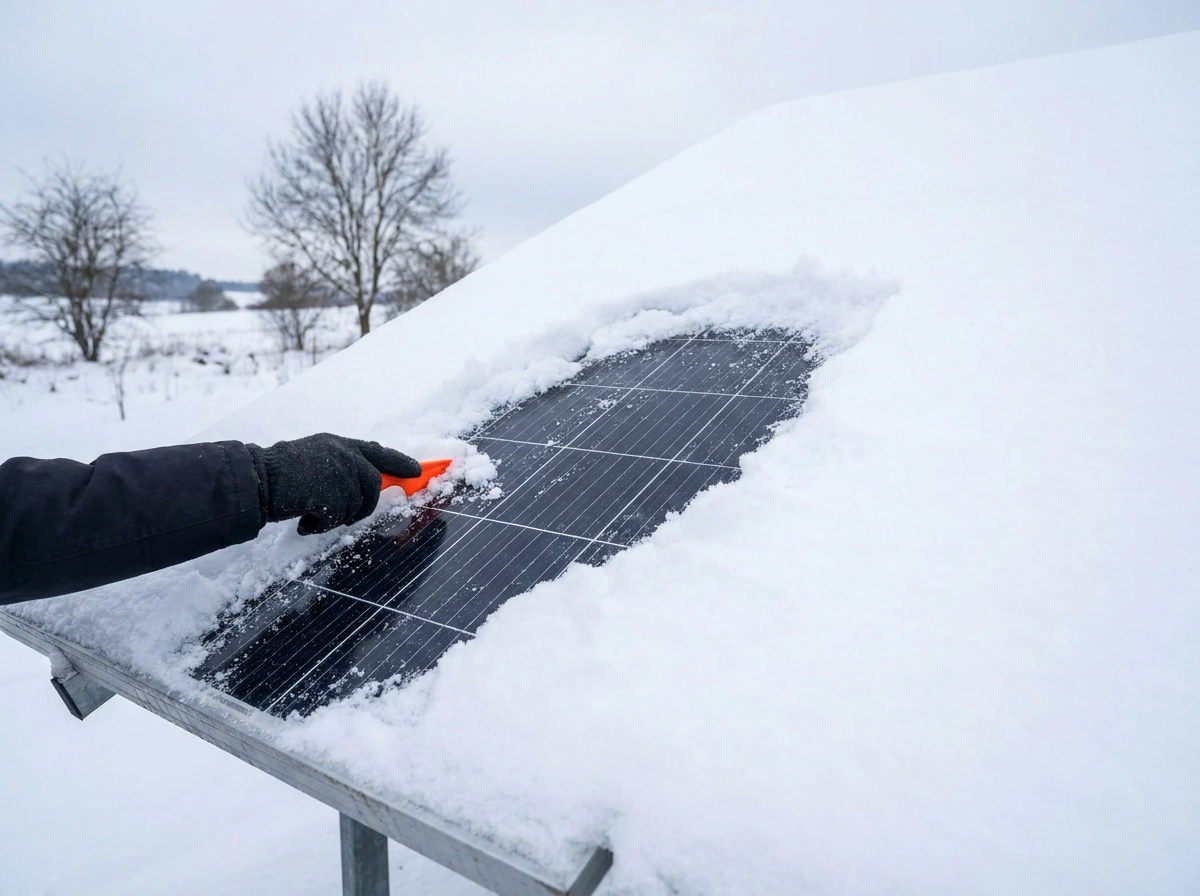
Shorter days, lower sun angles, persistent cloud cover and snow accumulation can significantly reduce solar production.
Snow coverage can be especially important. Research by Sandia National Laboratories highlights how snowfall, panel orientation and system design influence photovoltaic performance.
For off-grid applications, designers must evaluate seasonal energy production alongside battery storage and backup generation requirements.
However, daily energy consumption is only half the equation.
Peak power demand matters just as much.
A well pump starting while a refrigerator, microwave and other appliances are operating can place a substantial demand on the inverter.
The system must therefore be capable of handling both the total energy needed throughout the day and the maximum electrical load that might occur at one time.
Battery operating temperatures, equipment placement and winter accessibility also deserve consideration in BC's climate.
A properly designed system balances these factors rather than relying on panel count alone.
Why Your Load List Comes Before Your Panel Count
Before selecting equipment, prepare a list of everything that will need electricity.
Include lighting, refrigeration, water pumps, internet equipment, heating-system components, appliances and any recreational or workshop equipment.
For each item, estimate its electrical consumption and how long it operates on a typical day.
Also consider whether the property is occupied seasonally or year-round.
This information helps establish two important requirements:
Daily energy consumption: How much electricity the property needs over a 24-hour period.
Peak electrical demand: How much power might be required when several appliances operate simultaneously, including motor-starting loads.
These figures help determine appropriate solar array capacity, battery storage, inverter size and backup generation.
Energy efficiency can make a considerable difference. Choosing efficient appliances, LED lighting and suitable heating solutions may reduce both the initial cost and ongoing operating requirements of an off-grid system.
Should You Compare Off-Grid Solar With a Utility Connection?
For some rural properties, it's worth comparing the cost of a standalone power system with the expense of extending electrical utility service.
Depending on the property's location, electricity service in the Okanagan may be provided by BC Hydro or FortisBC. FortisBC also provides natural gas service in parts of the region, but natural gas availability does not necessarily mean electrical service is available at the property.
Where a utility connection is possible, homeowners should request a site-specific service-extension estimate before deciding which approach makes the most financial sense.
It's also important to distinguish a fully off-grid system from a grid-connected solar installation.
Grid-connected systems may qualify for utility-specific programs or incentives, while standalone off-grid installations generally have different requirements and should not be assumed eligible for the same benefits.
The right choice depends on location, electrical needs, installation costs and the owner's priorities for energy independence.
What Rural BC Property Owners Should Consider Next
Before investing in equipment, consider a few practical questions.
Will the property be occupied year-round or only seasonally? What are the most important electrical loads? How much backup capacity would you want during an extended period of poor weather?
It's also important to consider equipment accessibility, maintenance requirements and future expansion.
Permitting and electrical safety requirements should be addressed early. In British Columbia, solar electrical installations generally require an appropriate electrical permit, and installations must comply with applicable electrical codes and inspection requirements.
The Technical Safety BC electrical permitting information is a useful starting point.
An experienced installation professional can help evaluate the property's requirements and develop a system that balances reliability, performance and cost.
Conclusion
Successful off-grid living starts with understanding how much electricity you need, when you need it and how you'll produce and store enough energy throughout the year.
Solar panels are an important part of that solution, but batteries, backup power, equipment selection and sound system design are what make it dependable.
Westwinds Holdings Solar helps rural property owners throughout Kelowna and the Okanagan explore practical off-grid energy options, providing local consultations and working with qualified installation partners.
Whether you're planning a recreational cabin, upgrading an existing off-grid setup or considering a fully independent rural home, we're happy to help you explore the possibilities.
Contact Westwinds Holdings Solar to discuss your property and find out what an off-grid solution might look like for you.